Cleowi curated discovery
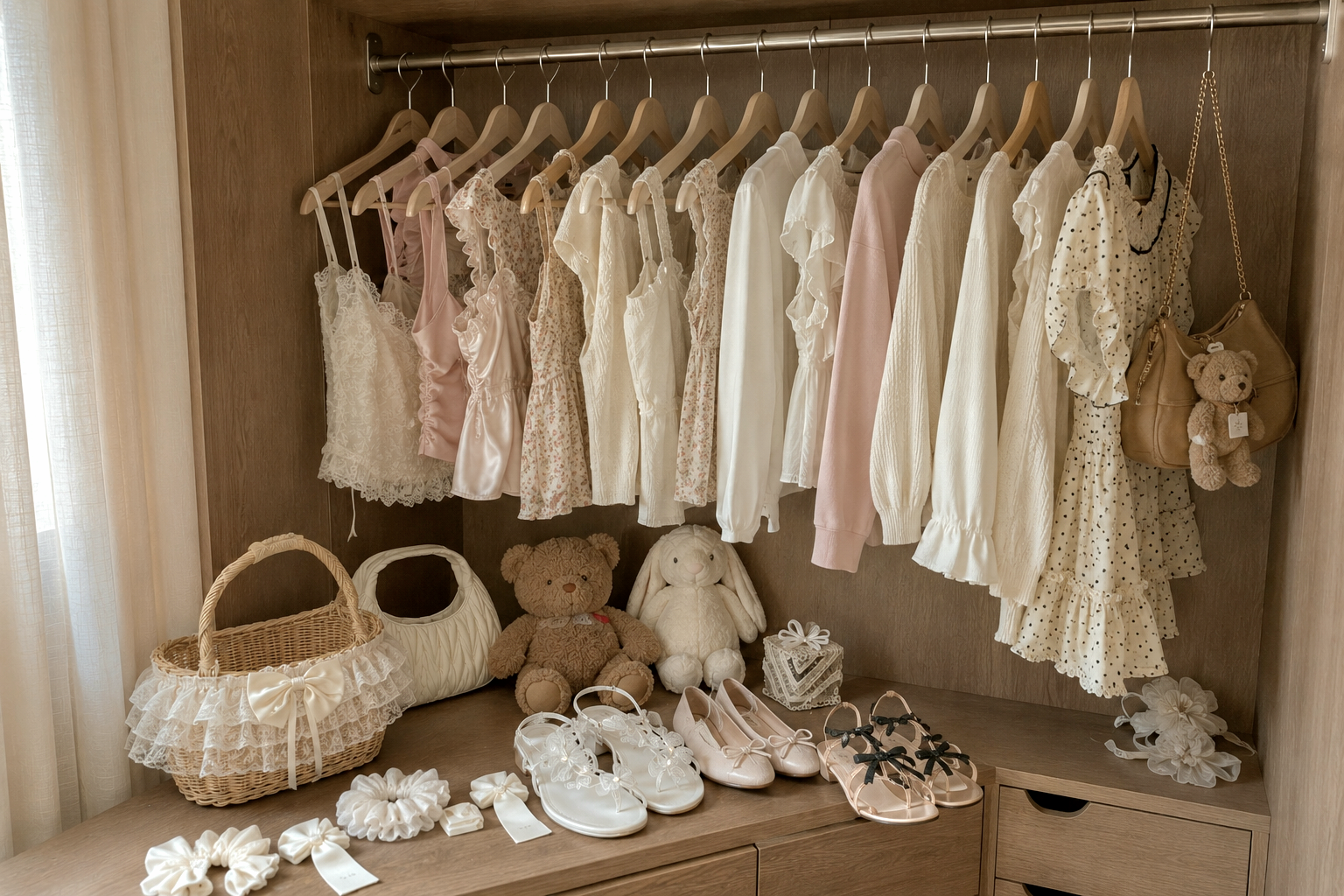
How to Build a Soft Fashion Wardrobe
Build a soft fashion wardrobe around wearable silhouettes, useful neutrals, romantic texture and pieces that genuinely work with your real closet.
A soft wardrobe can look beautiful on a moodboard and still be surprisingly hard to wear on a Tuesday morning. The problem is usually not a lack of pretty pieces. It is that the pieces all want to be the main character at once.
The most useful version of soft style is quieter than that. It has a working base, a few romantic details, and enough contrast to keep everything from feeling costume-like. Think of it less as a list of things to buy and more as a way of editing what you already own.
Start with the outfits you repeat, not the ones you save
Before adding anything, look at the clothes you reach for when you have five minutes to get dressed. Maybe it is straight-leg jeans and a fitted top, a slip skirt with a cardigan, or wide-leg trousers with a simple tank. Those repeat outfits are useful because they show you which shapes actually fit your life.
Keep the silhouettes that already work and soften them from there. A plain white tee can sit under a lace-trim cardigan. Dark denim can ground a floral blouse. A tailored trouser can make a satin camisole feel less precious. This is more reliable than replacing your entire closet with a matching aesthetic.
Current capsule-wardrobe advice from fashion editors tends to come back to the same idea: versatile foundations make trend-led or decorative pieces easier to wear. That matters even more with romantic dressing, where texture and detail can build up quickly.
Give the wardrobe a calm base
Soft style does not require a closet full of pale colors. It does need enough quiet pieces to give the detailed ones somewhere to land.
Choose two or three neutrals you already wear well. Cream and chocolate can feel warm and romantic. Gray and black make lace and satin look sharper. Denim is useful because it adds texture without asking for attention. Once that base is clear, add a small color family rather than every pastel at once: blush with burgundy, pale blue with cream, butter yellow with brown.
A limited palette also makes shopping easier. If a new blouse only works with one skirt, it is not really supporting the wardrobe. If it works with your jeans, your trousers and one skirt, it has a job.
Texture is where the softness actually happens
A romantic wardrobe made only from color can look flat. Texture is what gives it depth.
Lace trim, fine knits, satin, mesh, subtle florals and soft ruching all work, but they do not need to appear in the same outfit. Pick one texture to lead and let the rest of the look be simpler. A sheer blouse over a plain camisole with denim has more tension than a sheer blouse, satin skirt, bow bag and ballet shoe all fighting for the same mood.
This is also where fabric quality becomes easier to judge in person. Look at whether lace lies flat, whether satin pulls at the seams, whether a knit recovers after stretching, and whether a sheer layer feels comfortable against the skin. A romantic detail is only useful if the garment is pleasant enough to wear again.
Use contrast so the look does not become a costume
The easiest way to make soft dressing feel current is to include one element that is not obviously romantic.
Try a lace top with a tailored trouser. Wear a floral skirt with a leather-look jacket. Add a dark belt to a pale dress. Put a boxy blazer over a slip-inspired shape. Contrast creates a little friction, and that friction is usually what makes an outfit feel personal rather than themed.
Shoes can do the same job. Ballet-style flats keep the softness going; a loafer, boot or clean sneaker changes the sentence completely. Neither is more correct. The useful choice is the one that fits where you are actually going.
Make every new piece pass a three-outfit test
Before buying, picture three complete outfits with things you already own. Not three fantasy outfits saved on Pinterest—three outfits you could put on tomorrow.
Would you wear the blouse with jeans, a skirt and under a blazer? Could the cardigan work over a dress and with trousers? Would the bag make sense with most of those outfits in the next two weeks? Does this piece solve a gap, or is it simply a prettier version of something I keep ignoring?
If the answers are weak, leave it. Soft style should make your wardrobe easier to use, not turn it into a collection of beautiful exceptions.
A good soft wardrobe does not look as if it came from one shopping trip. It looks collected. Some pieces are plain, some are romantic, some are a little unexpected, and together they make sense on the person wearing them.